Volcano News from Ol Doinyo Lengai:Sunday, Dec 09, 2012
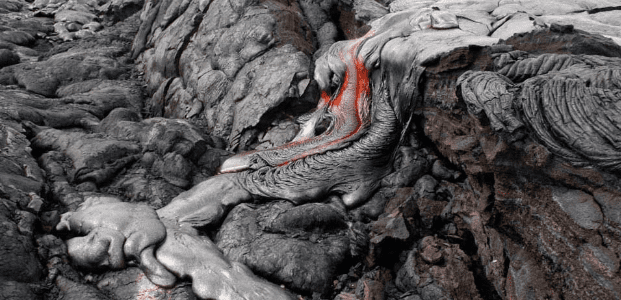
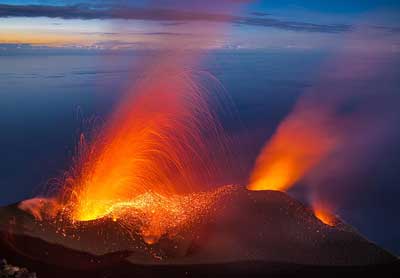
Spattering and lava flows of carbonatite lava inside the deep summit crater of Lengai have been recently observed by climbers. The crater which formed during explosive activity in 2008 is gradually being filled by spatter cones and small lava flows.
[more]
Monday, Oct 11, 2010
Our friend Michael Dalton-Smith flew over Lengai 10 Oct 2010 and snapped a few shots of the crater. There were some recent small lava flows inside the new crater. Also there we signs that new cone has had some more minor collapses on the inside. He could not tell 100%, but there looks like a small lava lake. ...
[more]
-> Lengai volcano photosOl Doinyo Lengai volcanoStratovolcano 2890 m
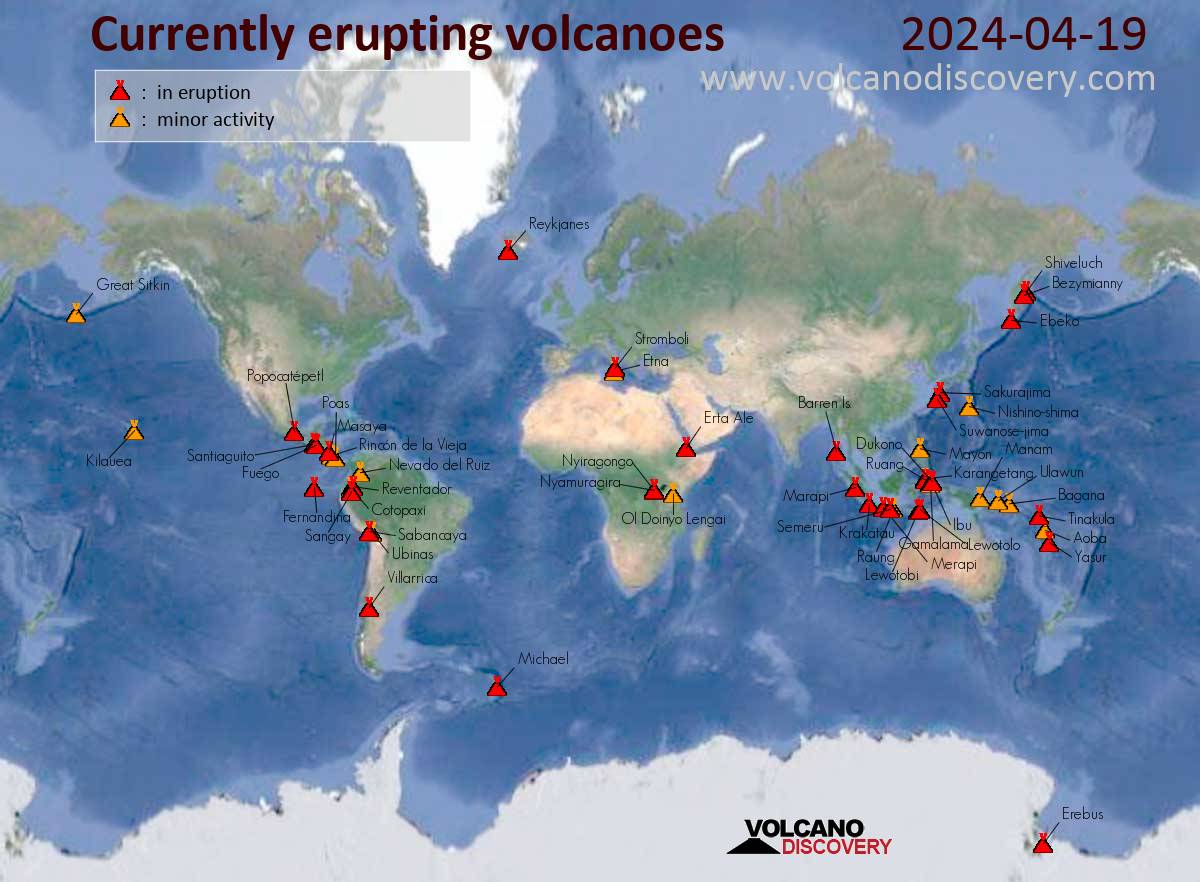
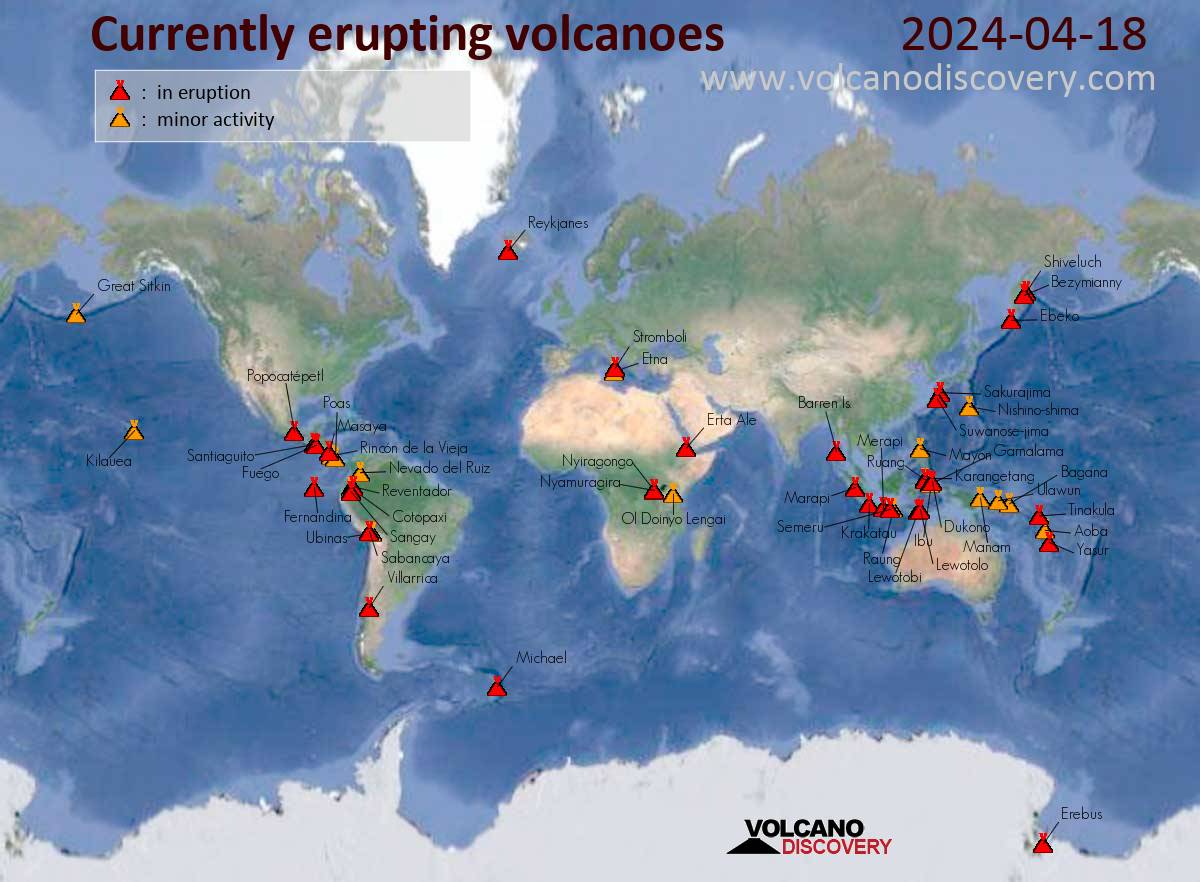
Tanzania, -2.75°S / 35.9°E Current status: erupting (4 out of 5) Ol Doinyo Lengai webcams / live data [hide map] [enlarge map]
Last update: 9 Dec 2012 (spattering and lava flows of natrocarbonatite lava inside the summit crater)
Typical eruption style: Explosive activity. In addition, at least during the past +-30 years near-continuous effusion and mildly explosive eruption of natrocarbonatite lava from vents inside the crater, sometimes overflowing over the rim, is taking place. Ol Doinyo Lengai volcano eruptions: 1550 BC (?), 50 AD (?), 700 AD (?), 1350 (?), 1880, 1882, 1904, 1907, 1914, 1916, 1921, 1926, 1940, 1954, 1955, 1958, 1960, 1967, 1983, 1994, 2006, 2007-ongoing ![]() Ol Doinyo Lengai Volcano Photos Last earthquakes nearby:
![]() Background:Ol Doinyo Lengai is an extremely fascinating volcano: it is the only active volcano known to erupt carbonatite lava, a sensational discovery scientists made as recently as in the 1960s: the lavas it erupts are NOT melts based on silica, but on natroncarbonate!Thus, the temperatures of these lavas are much lower, "only" about 600 deg. C., and Lengai's lava does not emit enough light to glow during day,- only at night, a dull reddish glow that does not illuminate anything is visible. Also because of its peculiar chemical composition, the lava is extremely fluid and behaves very much like water, with the exception that it is black like oil. After it is cooled down it quickly alters and becomes a whitish powder. Geologically, the present-day cone of the volcano was constructed about 15,000 years ago. Historical eruptions have been moderate to small explosive events. In addition to its intermittent explosive activity at intervals of typically years or decades, numerous natrocarbonitite lava flows have been erupted from vents on the floor of the active summit crater. The depth and morphology of the active (northern) crater have changed dramatically during the course of historical eruptions, ranging from steep craters walls about 200 m deep in the mid-20th century to shallow platforms mostly filling the crater. Long-term lava effusion in the summit crater beginning in 1983 had by the turn of the century mostly filled the northern crater; by late 1998 uptill today lava had begun overflowing the crater rim. Ol Doinyo Lengai Photos:Activity in 2010 - natrocarbonatite flows on the crater bootom
Similarly to previous phases, new natrocarbonatite lava is being erupted from vents at the bottom of the new crater. If this activity continues, it might once again fill the crater. Links and further info:
|